26 Jan 2026
Top 6 Beginner Forex Trading Mistakes
Forex trading can come with an equally high level of reward as it can risk. The trick to successfully trading is learning how to manage the potential risks, such as:
Although you may be aware of the above risks, you might not be familiar with how to manage risk in forex trading. Keep reading to find out how to effectively manage the potential risks of Forex trading.
Risk management is crucial in Forex trading if you want to protect your trading capital and ensure long-term sustainability. It will also help you to stay emotionally disciplined when trades do not go as expected.
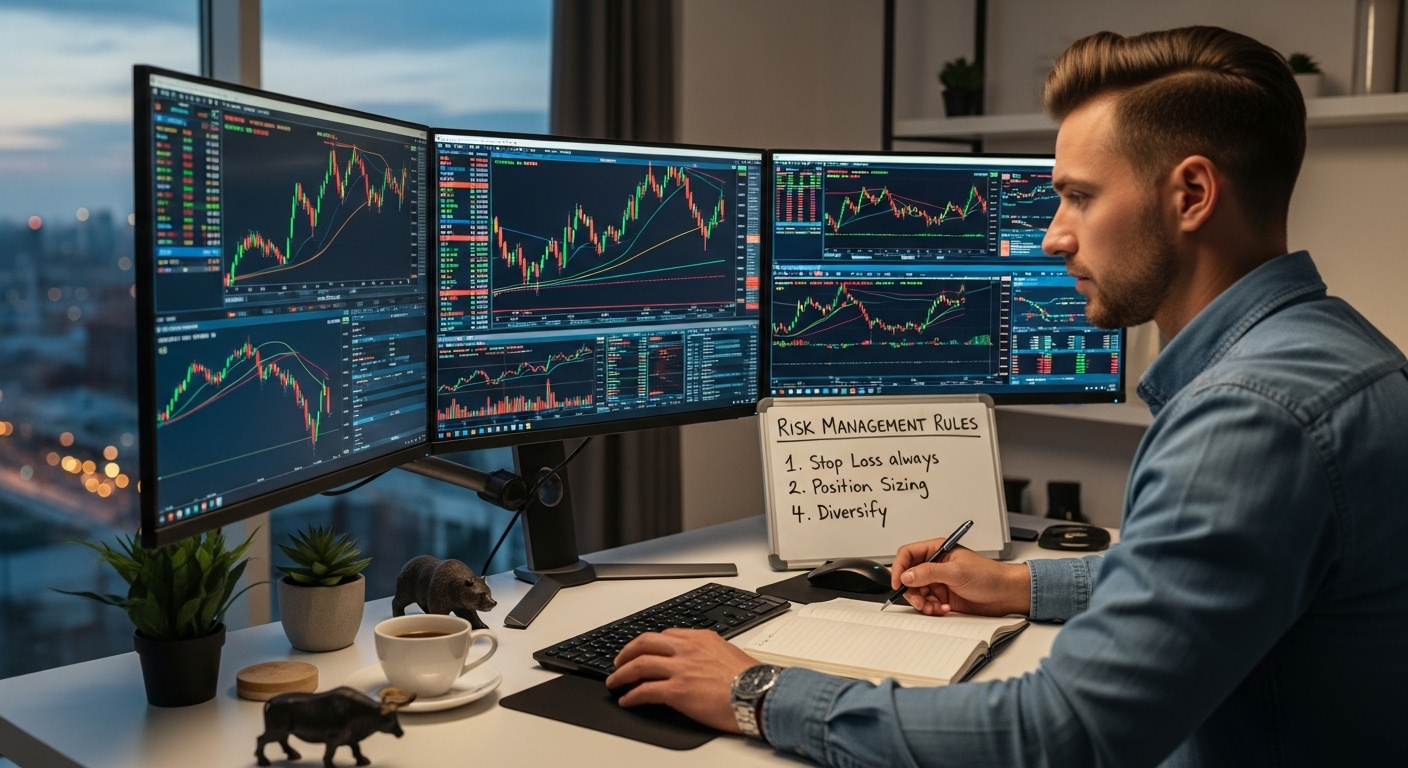
First and foremost, before you start any type of trading, you’re going to need a risk management plan for your strategy to be effective. This plan should outline any measures and/or set of rules you will implement to lessen the negative impact should a trade go poorly. Keep it in an easily accessible place where you can update it, review it, and report on your progress as your journey develops.
Developing a risk management plan will help you to stay on track when the market inevitably becomes uncertain. It will provide you with the framework and discipline you need to ensure you don’t dive into new trades without analysing them and thinking of the potential negative outcomes. This, in turn, will improve your chances of profit sustainability.
An effective way on how to manage risk in forex trading is by setting stop-loss and/or take-profit levels. These protect your trade at either end of the scale. For example, a stop-loss is a protective level that will prevent losses should the trade go against your expectations. Your position will automatically close when it reaches the set amount you decide on, preventing unmanageable loss. On the other hand, a take-profit level is an amount you set regarding how much profit you wish to make.
Should you reach this amount, the account will automatically close before the market has a chance to reverse. This ensures that you won’t leave any potential gains lost or unrealised. Ideally, you should set up both of these levels to prevent losses on either end, and you should work them into your forex trading risk management plan.
If you want to trade safely and manage your risk level, you should think about position sizing.
A common guideline for position size is to only risk 1-2% of your total account capital per trade. For example, if you have an account of £10,000 and choose to risk 1%, your maximum risk per trade will be £100. Once you have determined your risk per trade, you need to identify your stop-loss level.
Set a stop-loss level where your account will automatically close should the trade move against you. This will stop you from suffering an unmanageable loss. Setting a stop-loss level will help you understand your risk per share. For example, if you buy a share at £100 and you set your stop-loss to £90, your risk per share will be £10.
After you have decided what your stop-loss level is, it’s time to divide your total risk per trade by your risk per share. For example, using the number above, you would do the following: 100 divided by 10 = 10. This means you have 10 shares.
Once you have this number, you know exactly how much position size you have during your trades, so that should they go wrong, you won’t be faced with an unmanageable loss.
No matter the trade, the risk you take should always be worthwhile. Although this may seem obvious, you’d be surprised how easy it is to slip into making risky trades. In a perfect world, you want the profit you make to outweigh the losses. This way, you will make money in the long run on your investments. Setting a risk-to-reward ratio can help this along.
Finding the risk-reward ratio can be easier than you think. All you need to do is compare the amount of money you are comfortable risking on the trade to the potential gain. For example, if the potential loss on a trade is £200, but the maximum potential gain is £800, the risk-reward ratio would be 1:4.
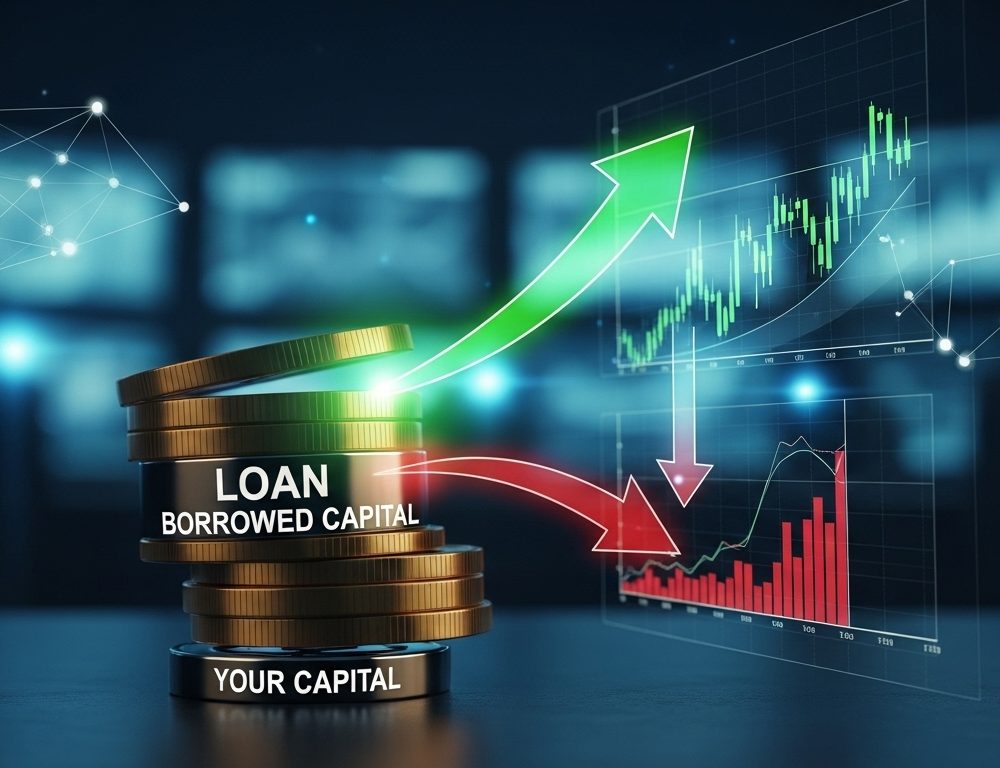
Although leveraging is a well-known and practised strategy in trading, it can be easy to overleverage. You can overleverage by maxing out the funds you borrowed or by taking too high a leverage. In these cases, if you experience a loss, it can be detrimental and even wipe out your whole capital. Use smaller positions or a lower leverage when trading to protect your capital and give it room to breathe should a trade not go the way you had planned. It’s also wise to use a cash cushion to absorb any market swings and to place stop-loss levels in place.
A margin call is an alert that is sent to you to warn you that the funds in your account are less than the minimum amount needed to keep the position open. If you fail to add more funds to the account (usually within two to five days), this can lead to an automatic closure of the position(s). To continue trading with a margin, you must have a fixed percentage of an investment in your account at all times.
To avoid a margin call, ensure you:
The one key component that can affect how to manage risk in forex trading and the success of your trades is actually you. When the market becomes volatile, or even when it starts to sway in your favour, your emotions can come into play.
Fear, anxiety, temptation, and even greed can entice you to make risky trades and cloud your judgment. Try to keep your emotions out of every trade you make, and stick to the risk management plan you made. This is the easiest way to keep a clear head and stick to statistics and your plan, rather than letting emotions take control.
STARTrading makes it its mission to teach people how to trade successfully and safely. With our years of experience in trading, we are experts at providing trading courses for beginners and for people who wish to refresh their skills and knowledge. You’ll learn in a realistic but short timeframe, and go away knowing how to trade while managing risk by utilising just 30 minutes of your day.
If this all sounds like something you’re interested in, you can sign up for our events (some are even free!), download our trading eBook, or reach out to us with any questions.
Author: Lewis Crompton